HK
HK
1.
Shopify
2.
BigCommerce
3.
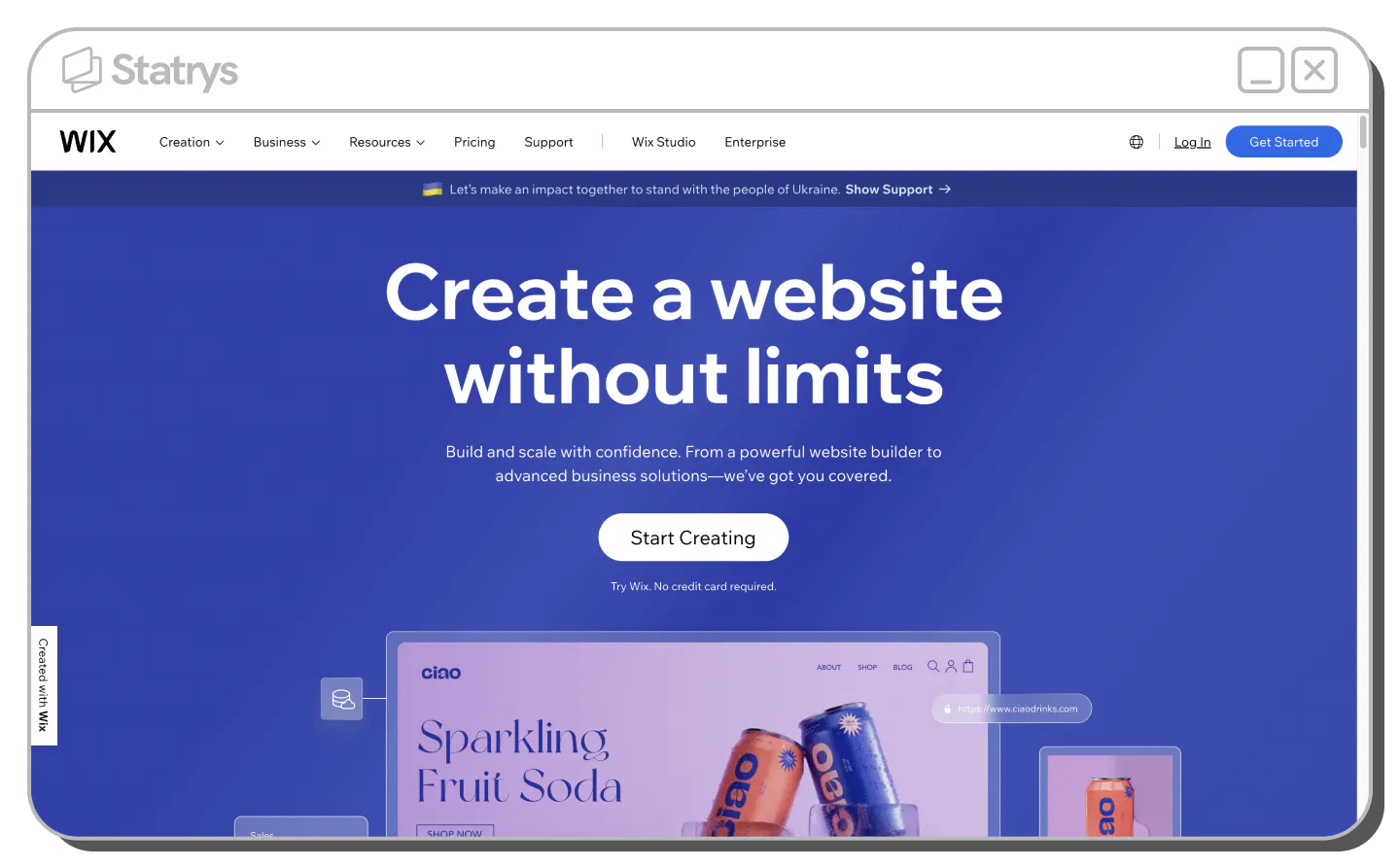
Wix
4.
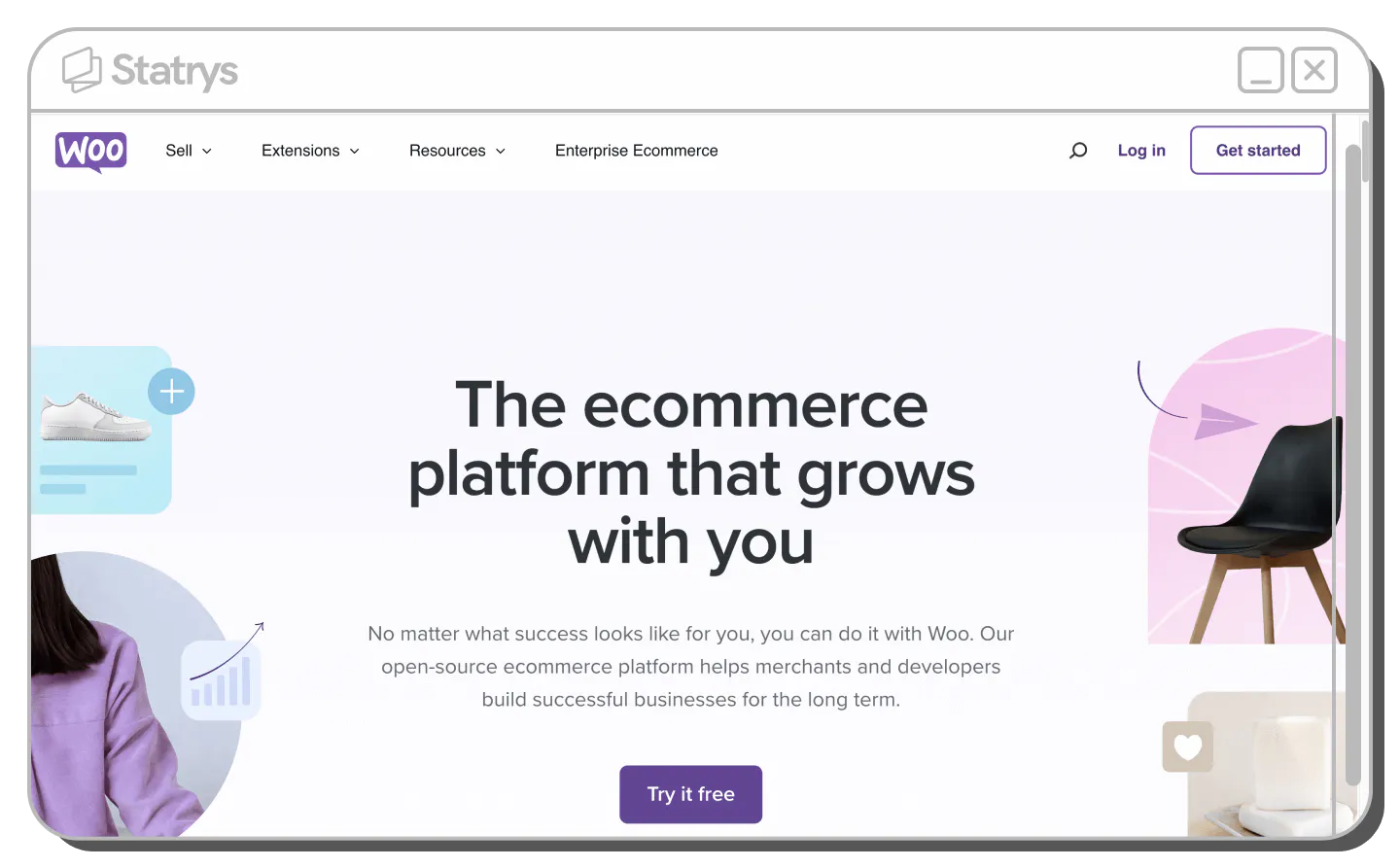
WooCommerce
5.
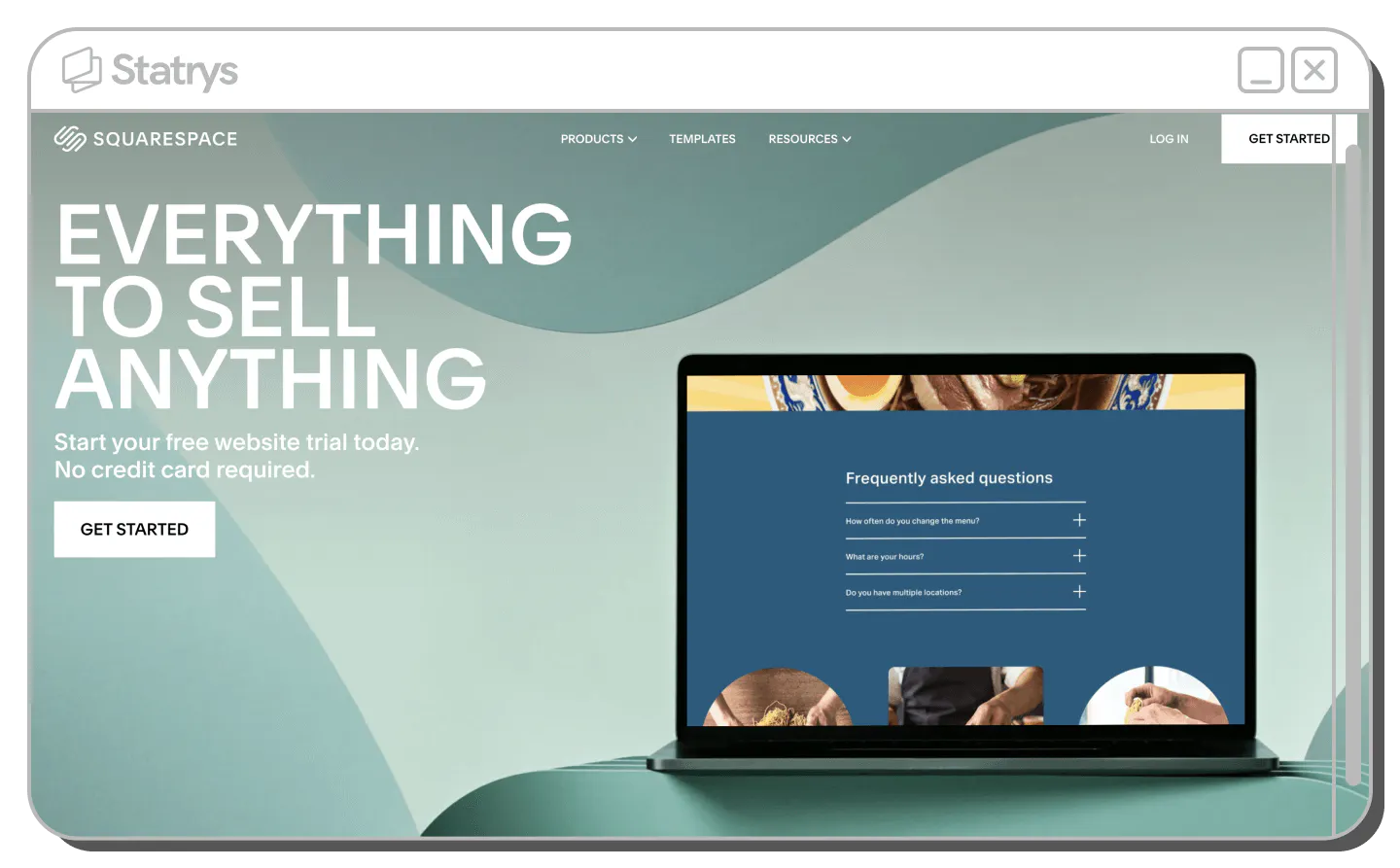
Squarespace
6.
nopCommerce
Global ecommerce sales are projected to hit approximately $6.3 trillion by the end of 2023.
Given these ecommerce growth projections, many entrepreneurs are opting to start an online business to capitalize on this growth. A part of the journey is choosing how the website will be built. There are two options that most people opt into, such as hiring a web developer to build a custom website or choosing an ecommerce platform that allows users to build a website without requiring any coding skills.
This article will focus specifically on the second option, ecommerce platforms. We will discuss what an ecommerce platform is, the best ones in the market, its best features, pricing, pros and cons, and what to consider when choosing one.
An ecommerce platform is software that allows online businesses to manage an ecommerce website, from creating and running an online commerce website to managing sales and marketing.
These platforms have important commerce-related features such as product listings, checkout processes, inventory control, marketing tools, analytics, etc.
Merchants can use this platform to jumpstart their store instead of building one from scratch.
That said, while a pre-built feature and functionality are convenient, choosing the right ecommerce platform is not so straightforward. There are many aspects to consider, which we will discuss in the next section.
Different platforms are suitable for different types of businesses depending on size, budget, and goals. However, there are some universal criteria that anyone can use as guidelines, such as:
An ecommerce platform needs to be easy to navigate for both business owners and customers.
It's best if the platform allows business owners to easily build and maintain their online store without advanced technical skills or coding knowledge. Owners are better off focusing on inventory management and customer experience rather than dealing with website upkeep.
An optimized shopping experience is even more of a must. From browsing to purchasing, the experience should be effortless. After all, poor functionality causes 42% of people to abandon a website.
To ensure the friendliness of a platform, consider the items on this list:
In short, the more payment options, the better.
The platform should allow the business owner to accept the most popular ecommerce payment methods, including mobile wallets, credit cards, debit cards, bank transfers, buy-now-pay-later (BNPL), and cash on delivery.
Options of various digital wallet payment providers such as PayPal, Apple Pay, and Google Pay are also important.
If you sell physical products that need to be shipped, then yes, shipping options matter.
The platform should allow you to provide various shipping carriers and services, such as FedEx, UPS, USPS, DHL, etc.
Additionally, it should allow you to set flexible shipping rates, such as conditional free shipping, flat rate shipping, weight-based shipping, etc., as it will affect your customer buying decision.
After all, 77% abandoned purchases due to unfavorable shipping, 84% made purchases specifically because shipping was free, and 30% increased their order amounts to qualify for free shipping.
Once your business grows, the platform should be able to accommodate increasing traffic, a more extensive product catalog, and order amount without compromising the performance or security of the website.
While the ability of a website to perform technical relates more to hosting infrastructure than the platform itself, some ecommerce solutions provide hosting as part of the package, while others require you to source hosting separately.
For those that include hosting, look for the following:
Typically, 100 GB bandwidth is enough to host small to medium-sized websites that receive 10 to 20K monthly visitors. However, the best rule is to go for unlimited bandwidth (which does exist).
Likewise, if you need to scale down your website for seasonal fluctuations or other reasons, you should look for a web host that allows you to adjust your plan without penalties or long-term contracts. This way, you can save money and resources when you don’t need them.
High chances are that your budget is a key part of your overall plan. So, you'll want to choose a platform that spells out precisely what you'll pay. Make sure there aren't any surprise charges down the road as your needs change.
Ask them to explain all the potential costs like set-up fees, transaction fees, domain registration, add-ons for analytics or extra plugins, and whether prices change if your traffic increases significantly.
Additionally, take different pricing models into account. Are you better off with monthly or annual subscriptions or pay-as-you-go plans?
Your online store collects sensitive data, specifically customers' personal and financial details. Hence, you want to ensure that your ecommerce platform has strong protection.
Standard ecommerce website security features include encryption, firewall, backup, and recovery, which prevent or mitigate cyberattacks and data breaches.
The platform should also comply with the latest security standards and regulations, such as PCI DSS (Payment Card Industry Data Security Standard), GDPR (General Data Protection Regulation), and SSL (Secure Sockets Layer). Those are the most important criteria when choosing an ecommerce platform. However, given the many options available, we recommend some top choices for you to consider.
Tip: One way to determine if a website is encrypted and secure with SSL is to look at the URL. It should start with HTTPS instead of HTTP.
Whether you need inventory tracking, automated marketing, data analysis, bookkeeping, or better customer service - plenty of ecommerce software, apps, and plugins can help.
But to make the most out of those tools, your ecommerce platform must be able to integrate them. In other words, the platform should be able to sync everything up and automate workflows without you having to manage several separate systems.
Not all platforms have the same integration capability. So, if there are specific apps you want to use, check that your platform supports connecting to them first before fully committing.
If you’re unsure about the tools needed to integrate with your store, the major types of applications to consider are
Considering the above considerations and your business objectives, let’s explore the five most popular ecommerce platforms.
Note: All information provided below is dated 7 August 2023 and may have been updated since. Pricing may also differ depending on your geographic location. Please check each platform’s website for the latest information.
| Best For | Monthly Price | Free Trial | |
|---|---|---|---|
| Shopify | All-in-one ecommerce solution | USD 39-399 | 3 days |
| BigCommerce | The go-to solution for big companies | USD 39-399 | 15 days |
| Wix | Solution for individual sellers | USD 16-159 | 14 days free cancellation |
| WooCommerce | Open-source solution, best for WordPress users | USD 39-70 | 14 days |
| Squarespace | Ease of use, variety of high-quality templates | USD 23-65 | 14 days |
| nopCommerce | Open-source ASP.NET solution, powered by Microsoft's tech stack | Free | Limitless |
Shopify is one of the most popular ecommerce platforms, powering millions of businesses globally.
It markets itself as a complete commerce solution. Users can easily create an online store through their drag-and-drop store creator and access all the tools needed to sell and fulfill orders on their storefront.
Shopify's key advantage is its suite of solutions and plugins, including integrated payment processing, shipping, inventory management, audience insights, point-of-sale, marketing capabilities, and more.
| Shopify Plan | Pricing |
|---|---|
| Shopify Basic | USD 39/month |
| Shopify Advanced (for medium to large businesses) | USD 399/month |
| Shopify Plus (for high-volume business) | USD 2,000/month |
BigCommerce is a leading SaaS ecommerce platform with advanced features for large businesses.
It aims to provide a fully-featured platform, allowing diverse customization of their storefronts, connecting necessary backend systems, and selling products.
Additionally, BigCommerce supports merchants through its large network of partners specializing in domains like design, development, and marketing.
| BigCommerce Plan | Pricing |
|---|---|
| BigCommerce Standard | USD 39/month |
| BigCommerce Plus | USD 105/month |
| BigCommerce Pro | USD 399/month |
| BigCommerce Enterprise | Custom pricing (contact sales) |
Wix is another popular drag-and-drop website-building platform that caters to many types of websites, including ecommerce. Users can choose from hundreds of customizable templates or start from scratch.
Wix further enables options like selling online, blogging, marketing, reporting, and mobile management capabilities.
Wix aims to be a platform accessible for any individual or business wanting to establish an online presence through its easy-to-use interface and functionality.
| Wix Plan | Pricing |
|---|---|
| Wix Light | USD 16/month |
| Wix Core (Basic ecommerce) | USD 27/month |
| Wix Business (Standard ecommerce) | USD 32/month |
| Wix Business Elite (Advanced ecommerce) | USD 159/month |
| Wix Enterprise | Custom pricing (contact sales) |
WooCommerce is an open-source ecommerce platform designed for WordPress. It enables merchants and developers to create digital storefronts with customization, sales functions, and support.
WooCommerce also integrates with payment gateways, shipping providers, and other commerce-related services.
WooCommerce is open-source software, which means it's technically free to download and use. But this means you must manage and pay for all the backend expenses, namely hosting, a domain name, and ongoing maintenance. Keeping all the technical stuff up and running yourself can get pricey and time-consuming. And it requires specialized knowledge.
However, WooCommerce also offers Woo Express, a hosting solution that can handle all the technical aspects and come with additional sale tools. In short, if you don't want to deal with the infrastructure, it outsources all that for a fixed cost.
The options are:
| WooCommerce Plan | Pricing |
|---|---|
| Woo Express Essential | USD 39/month |
| Woo Express Performance | USD 70/month |
| Woo Express Enterprise | Custom pricing (contact sales) |
Squarespace is another website builder service that allows you to create your own website without any coding skills. You can choose from hundreds of templates and customize them through powerful editing tools.
Squarespace also offers integrated ecommerce and marketing solutions to help users grow their online presence. A dedicated support team and a library of resources are also there to assist users.
| Squrespace Plan | Pricing |
|---|---|
| Squarespace Personal | USD 23/month |
| Squarespace Business | USD 33/month |
| Squarespace Basic Commerce | USD 36/month |
| Squarespace Advanced Commerce | USD 65/month |
nopCommerce is a free open-source eCommerce platform powered by the latest ASP.NET technologies. Unlimited customization, sufficient flexibility and scalability, and high security make it a perfect fit for middle- and large-sized B2B and B2C businesses.
Features like multi-vendor, multi-store, and omnichannel are included out-of-the-box, making nopCommerce a complete solution for enterprise eCommerce. The security of nopCommerce is ensured through PCI DSS and GDPR compliance. The out-of-the-box functionality of nopCommerce can be expanded with 1,500 integrations.
Multi-currency and multi-language support help businesses connect with customers all around the world. nopCommerce also offers easy integration with global payment systems, shipping services, and tax calculators to make international transactions smooth.
nopCommerce is entirely free to download and use. It is ready to use and has all the necessary features out-of-the-box. There is, however, a copyright note at the bottom of any store you create saying “powered by nopCommerce”. This can be removed by purchasing a copyright removal key for your website.
There's also a marketplace where you can download for free or purchase themes and plugins. Here are some examples of the most popular plugins and extensions of nopCommerce:
| nopComerce Plugin or Extension | Pricing |
|---|---|
| PayPal Commerce | Free |
| Avalara (Tax Compliance Software) | Free |
| nopCommerce Web API (official plugin) | USD 1400 |
| Full-text search based on Elasticsearch (official plugin) | USD 500 |
| nopCommerce copyright removal key | USD 500 |
As we've covered the major players in this space, we hope you have a better idea of which platforms align best with your business goals and technical skillset.
Our last bits of advice? Make a wishlist and hit the free trial button. You never know whether a platform fits well until you wander into the real dashboard.