HK
HK

Becoming a successful entrepreneur doesn’t happen by accident, and it doesn’t happen overnight. It takes a deep understanding of your industry, the need to offer something that others in the field don’t (or can’t), and a lot of planning. A business plan template is a great way to put your ideas into a form that will help you during the planning stages and when you’re running your company day to day.
A business plan can help you avoid being one of the almost 50% of businesses that fail within the first five years. A plan gives you a better chance of gaining the funding you need and the long-term guidance to make decisions that will maintain or grow your market share. Download the free business plan templates that are right for you below.
A traditional business plan is one of the most thorough plans you can create. While putting this document together will take more time and effort, it will stay helpful beyond the planning and opening stages. An excellent traditional business plan will have everything you need to open and run your business, and it can provide you with a framework for making decisions in the future. Whatever your small business idea, a traditional plan can help you prepare to make it a reality.
For a traditional business plan to be as useful as possible, it should include the following elements:
If your business idea requires fewer resources or is a fluid idea that shifts over time, a lean/startup business plan might be a better fit.
Need the PDF template? Download a free Traditional Business Plan Template here.
The startup business plan is designed to be more flexible and less intensive to complete. If your business doesn’t need much money, equipment, or other resources to get off the ground, a lean business plan could be a good fit for you. While many of the elements of a traditional business plan are in this template, you don't necessarily have to address them in as much detail as you would in a traditional business plan. This kind of template for a business plan is a good fit for a business in the early stages of planning, and it could work well for businesses that change structure frequently.
A lean business plan should include these elements:
Looking for something even more streamlined? A simple business plan template is precisely what you need.
Need the PDF template? Download a free Lean/Startup Business Plan Template here.
This simple business plan is only a few pages long and lets you lay out your business idea in the broadest possible strokes. Whether you want to use it as a guide for making decisions about your business while you’re running it or as a jumping-off point for a more in-depth business plan, its strength is in its brevity.
A streamlined business plan works best when it includes this information:
These elements are the same as those in the traditional business plan but try to answer them in a sentence or two to keep the plan as simple as possible. Ideating a single-page business plan can set you up for success in growing a service-based, brick-and-mortar, or ecommerce business.
Need the PDF template? Download a free Streamlined Business Plan Template here.
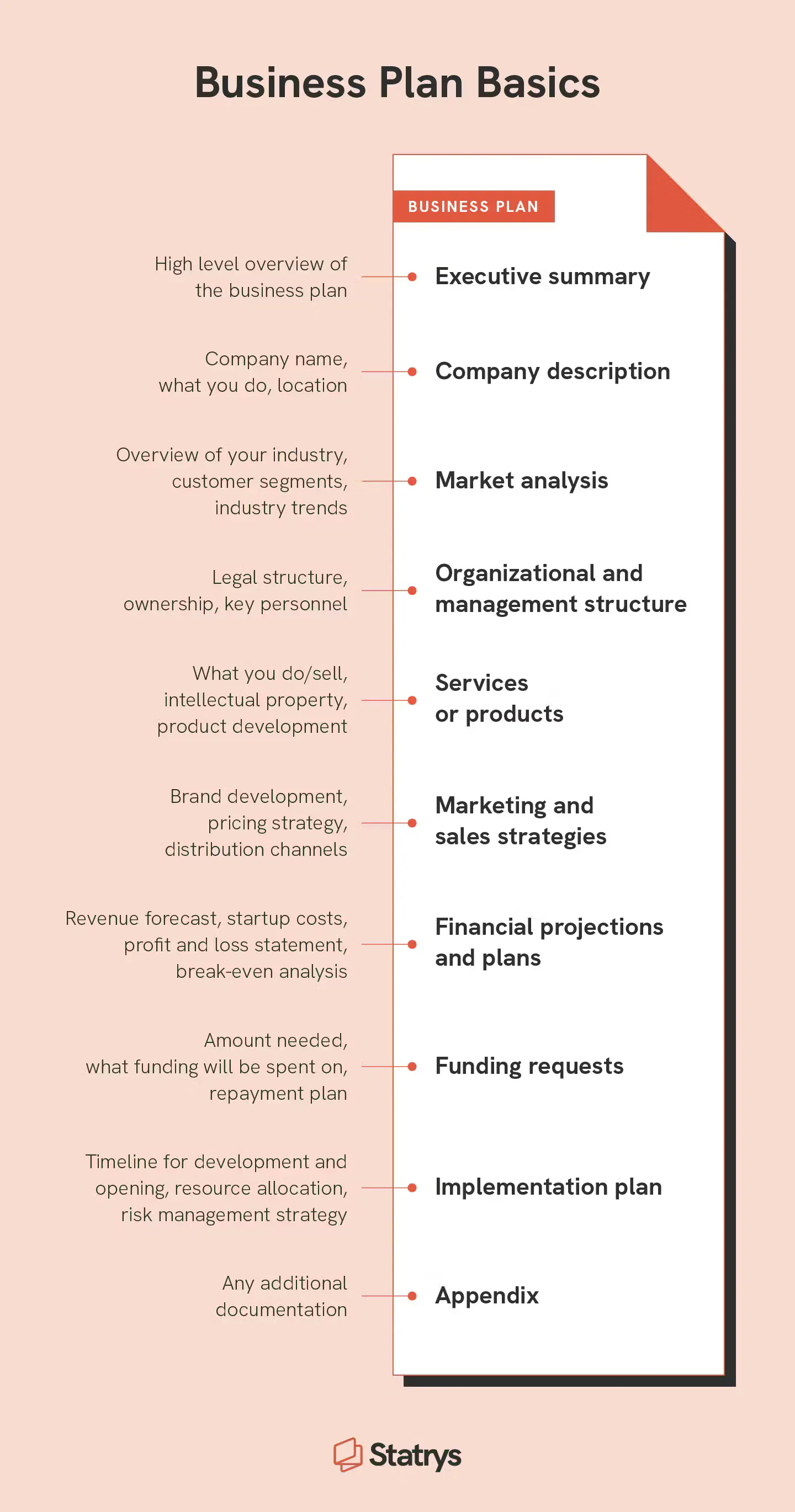
The basic function of a business plan is to provide you, your partners, and potential investors with information about what the business needs to get started and how it will be run. That means that each business plan will have a unique combination of elements. The sections below are a great place to start because they will help you look at your business holistically.
Now that you have an idea of some elements to include in your business plan, let’s look at some ways to make your plan stand out.
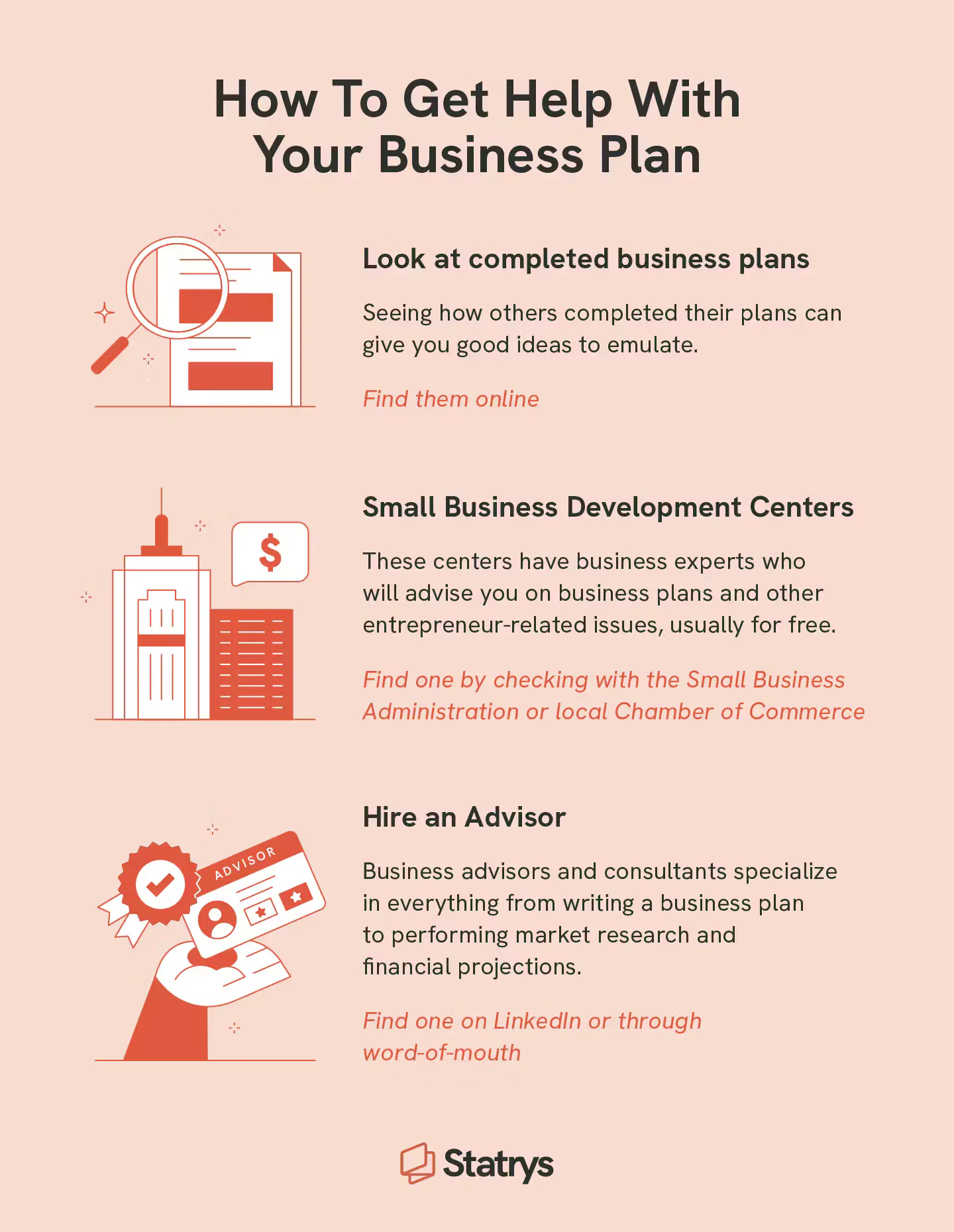
Learning how to write a business plan can be difficult and time-consuming. Whether it’s the first time you’ve tried to create one or put several of them together, each one will have its own set of challenges to work through. Below are a few ideas that can make your business plan better.
The internet is a great source for finding completed business plans. While you should look at examples from successful companies, it’s a good idea to look at plans that weren’t successful, too. They can show you some pitfalls to avoid. Check out the Small Business Administration to see examples of real business plans.
Your market analysis, customer segmentation, and competitor research are essential parts of your business plan. Not only does this research show investors that you understand the totality of your market, from suppliers to customers to your competition, but it also allows you to exploit gaps that others aren’t covering. Thorough research can also help you find better, more affordable vendors and other financing sources you would have otherwise missed.
Everyone wants their business to succeed, but everyone’s definition of success differs. If you want your business to have the best chance of succeeding, you need to set clear goals and criteria for measuring performance. Without goals, you’ll never be able to tell when the time is right to expand or when to tighten your belt.
When starting out, figuring out how to build a business plan — even a single-page business plan will take days or weeks to complete correctly. Rushing through a business plan can create more problems than it solves because you’re more likely to make mistakes when you’re in a hurry. A typo here and there or a slightly incorrect financial forecast might not be a dealbreaker in your eyes, but to an investor or bank, those small mistakes can make you (and your business) look unprepared. Spending a few extra days or weeks to ensure everything is perfect will be worth the effort.
Now that you’re ready to start working on your small business plan template look for ways to save money to maximize profit potential as soon as possible. Sourcing goods from manufacturers in China is one way to keep your costs low, with the opportunity to expand manufacturing if demand increases dramatically. You can also add a revenue stream in the form of an ecommerce store to make more money and grow your customer base.