HK
HK

Sure, you have a great business idea, and maybe you've even gotten a business license and started building an online store to bring it to fruition. But do you have what it takes to run that business? While there is no set recipe for how to be a successful entrepreneur, there are several strategies you can try — and we've tapped those who've been there and done it before to help.
Now, let’s make you a successful entrepreneur.
If you ask any entrepreneur what made them want to strike out on their own and open their own business, nearly every one of them will tell you that they were excited about the industry or the idea of doing things their way.
If you’ve had an enduring passion for something and you’ve long thought about what it would be like if you could spend your time pursuing that passion, you have the foundation to be a successful entrepreneur. While many outside forces can affect your progress, your passion and perseverance may be exactly what you need to weather a lot of obstacles.
There’s no shortage of ways to get information about being an entrepreneur from other entrepreneurs.
Sometimes the most valuable information will come from sources you might not think would apply to your business. Many of the people recording podcasts and writing books are talking to entrepreneurs of all kinds, so go in with an open mind.
There are so many people out there who are willing to share their experiences and help you learn from them — whether it's through books or podcasts or events — just find the ones that speak to you!
Gauri Manglik, CEO and co-founder, Instrumentl
One of the most critical success factors for any business is the ability to keep operating costs low. As a new business owner, you may not have the capital to hire every single person you need right away or rent a big office, but that isn’t necessarily a bad thing.
Growing too quickly, overhiring, and overextending your budget are surefire ways to doom your company. Instead of making those mistakes, spend time during the planning stages (and in the day-to-day operation of your business) doing everything you can to keep your expenses as low as possible while responsibly managing cash flow.
Here are a few ways to keep your costs down:
The unfortunate truth is that many businesses fail. In the United States alone, 18% of small businesses fail in the first year, and by the 10th year, 65% of businesses have failed. There’s not a single reason why the majority of companies don’t make it, but to be a successful entrepreneur, you have to look at those numbers and believe you’ll be part of that 35% who will make it past the 10-year mark.
And if the reason you know you’ll make it is because of your ability (and willingness) to work harder than everyone else, you’ve got a fighting chance. That might look like this:
All businesses hit rough patches, but being prepared to face those challenges with confidence that you’ll make it to the other side is one of the key qualities of a successful entrepreneur.
While your passion should provide you with momentum to get a business off the ground, if you don’t set tangible, realistic goals before you start, you’ll be flying blind. To set goals you can feasibly achieve, you’ll have to take the time to research the industry thoroughly. Some goals you should set include:
If you already work in the industry your new business will be in, use that to your advantage. Gather as much information as you can about the field, suppliers, and potential competitors. Use the tools and knowledge out there to create projections, and then base your goals on those numbers.
Setting benchmarks for your business over time can help you harness momentum and guide you through tough times. By focusing on where you want to go, you’ll be able to tell if you’re heading in the right direction or if you need to course-correct.
Each entrepreneur worth their salt knows the importance of having both short-term and long-term goals. Get your aspirations down on paper and posted someplace you'll see them often, like the wall in front of your desk. In this way, you can always keep in mind the greater purpose of your efforts.
Jay Soni, marketing director, Yorkshire Fabric Shop
Mistakes are inevitable as a business owner. But what you do when you make a mistake is what separates you from other entrepreneurs. The most successful people understand that it isn’t a matter of if they’ll fail, it’s a matter of when. And when they do make a mistake, they learn from it instead of letting it ruin them. Here are some of the most common mistakes many entrepreneurs make:
Mistakes can make you feel like you aren’t qualified to do your job or that you don’t know how to run a business successfully. But if you have a growth mindset, you can see them as opportunities to level up your skill set in the area where you stumbled.
Failure is a natural part of entrepreneurship. You will encounter setbacks and challenges along the way. The key is to learn from your failures and use them as opportunities to grow and improve.
Geordie Wardman, founder, Onestop Devshop
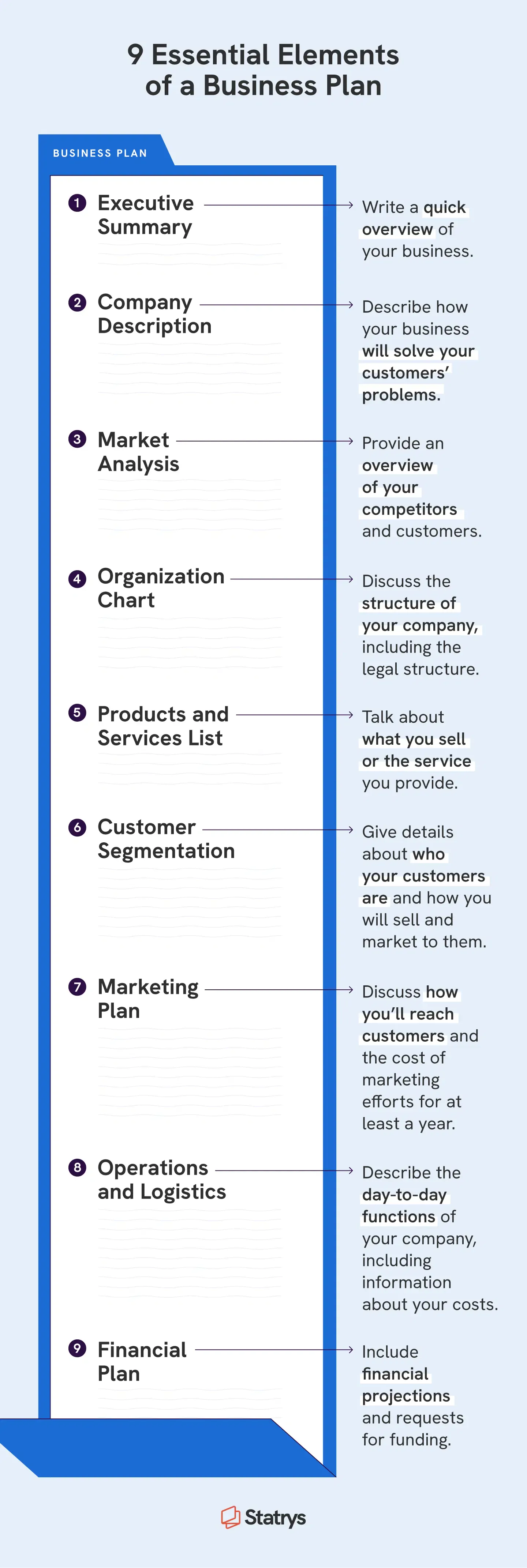
One of the most important steps you can take to present your new business the right way is with a thorough business plan. A good business plan can help you secure funding from investors, open a bank account, and keep your goals top of mind. Here are some of the most important parts of any good business plan:
There are many ways to put together a business plan, so make sure to spend some time researching your particular industry and market to get an idea of what will be most important.
[A business plan] provides you with a road map for your journey. It will help you secure funding, identify potential challenges and opportunities for your business, and clarify your business's goals.
Rhett Stubbendeck, CEO, LeverageRx
For most entrepreneurs, their business is much more than just a job — it’s a passion project that has a lot of their identity wrapped up in it. And while that passion is what you need to put in the long hours, it can get you into trouble when you have to make certain decisions about the business.
That’s why it is a good idea to use available data when you’re trying to work out a resolution to a problem. Slowing down and taking the time to analyze the numbers will help you get a better picture of the scope of your decisions while also dampening some of the emotions you’re likely feeling about a big decision.
If you have any of the following information, study it in order to make more informed, objective decisions:
This is especially important when you’re starting out. As you gain more experience and a better understanding of the factors impacting your business, you’ll be able to make data-driven choices more quickly.
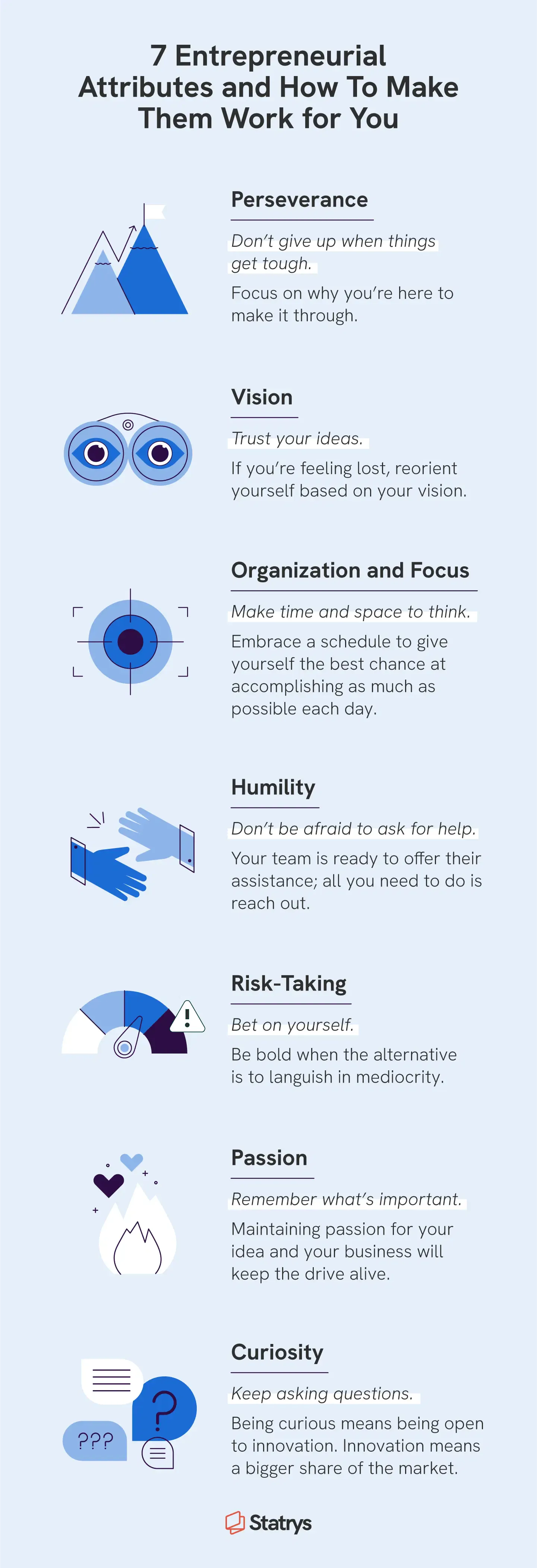
While entrepreneurs are just like everyone else in many respects, there are some characteristics they have that make them unique in the world of business. Whether you know it or not, you probably have some of these entrepreneurial personality traits if you’ve been thinking about starting your own business.
Learning to build off your strengths while reducing the impact of your weaknesses is vital for growing as an entrepreneur. Don’t get discouraged if you see any of these attributes in others and you don’t see them in yourself — other people likely feel the same way about your unique skills.
Search in a variety of places for ideas. Discover your inspiration and use it as fuel. Lean on your creativity-enhancing habits to develop this skill.
Thomas Lewis, CEO and founder, RIP City Review
The old adage that says “it’s all about who you know” is surprisingly accurate. It means if you want to be successful, you need to network.
Networking might seem at odds with some of the other qualities of successful entrepreneurship we’ve talked about, but getting to know other people inside and outside your industry is essential. By networking, you’ll learn what others are doing, who their suppliers are, and how they’re finding their place in the market. Find other entrepreneurs in your industry by:
Building relationships with other people can lead to new business you may not have otherwise earned just because you know the right people. Find online communities of other entrepreneurs, spend time meeting people at trade events, and get to know the other business owners in your area to expand your network.
Building any successful business is much more of a marathon than a sprint. Even behind those so-called “overnight successes” are years of hard work, study, and failures. The numbers don’t lie: It takes most businesses at least two years to turn a profit. Resilience in the face of difficulty should be near the top of every list of entrepreneurial personality traits because it will always be necessary.
Handling long journeys (literally or metaphorically) requires patience and planning. Know when to put in the extra hours and when to take a few days to reset. Learn to identify the signs of burnout that can lead to making rash decisions.
Most of all, remind yourself that even during difficult times, taking a single step forward is infinitely better than stopping.
You get knocked around often, so you have to be able to keep getting back up and trying again with enthusiasm and energy. A lot of people tell you no (investors, board, customers, candidates), so if you are easily daunted or do not have thick skin you will not last long in my experience.
Paige Arnof-Fenn, founder and CEO, Mavens & Moguls
Tools are there to make processes easier and the person using them more productive. While you might be used to doing things the hard way as an entrepreneur, take advantage of these tools to streamline your work and increase productivity.
Learning a new tool can help you focus on the parts of your business you’re best at, and those are the most important. Regularly evaluate all of your tools to make sure they’re the most effective for your needs, they fit your budget, and there aren’t better alternatives out there. These tools include your:
If you feel like something isn’t working as well as it could, do some research on available alternatives. While other systems may not solve all your problems, they may be able to provide you with more than you have at the moment.
Don’t forget to listen to your team, especially the employees who are dealing with these tools all day, every day — they can shed light on what’s functioning well and where there’s room for improvement.
There are always risks to running a business, but risk-taking can set you apart from others in your industry who want things to stay the same. Finding the balance between sure things and maybes isn’t a skill most people are born with, but you can learn it.
Some of the most common risks entrepreneurs take include:
While many of your decisions should be based on hard data, there are times when you need to trust your gut. Trusting your gut isn’t foolish; it’s a way of understanding your knowledge and experience on a level that goes beyond the purely intellectual.
You’re placing a bet based on a deep understanding of the odds. Sure, it’s still a bet, but if you’ve got a full house, your chances of winning aren’t bad.
Building a business takes time and patience; taking calculated risks can help you make progress faster, but success is a long-term game. Find mentors, stay curious, and never stop learning; this will take you far in life.
Geoff Cudd, Founder, Don’t Do It Yourself
Whether you’ve been an entrepreneur for years or you’re just getting started, these tips about how to be a successful entrepreneur will hopefully give you a boost of enthusiasm and energy for your next step. If you want to open a small ecommerce business as a side hustle or you’re diving headfirst into starting an international business in Hong Kong, start preparing for your journey today.