HK
HK
A purchase order is a document sent by the buyer to the seller to place an order for supplies or services, while an invoice is sent by the seller to the buyer to collect payments for the purchased goods.
Have you ever wondered how successful businesses track their purchases? Or how do they manage inventory seamlessly? The key is a document called a purchase order.
Whether you're an experienced business owner or just starting out, understanding the role of purchase orders is crucial for efficient and effective business management.
In this article, we will explain what a purchase order is, why it’s important, and how it’s different from an invoice. We will walk you through how this document makes the procurement process smoother and more organized for businesses of all sizes.
A purchase order (PO) is a document that a buyer sends to the seller to request a purchase. It outlines order details, product specifications, quantity, billing terms, and shipping terms.
Typically, placing a purchase order initiates the sales transaction, and the order becomes a legally binding document once the seller accepts it. This means that the customer is obligated to pay for the purchase, and the seller is committed to delivering the goods or services.
Because of this status, a purchase order offers legal protection for the supplier against non-payment or order cancellation.
Additionally, a blanket purchase order is commonly used by customers who want to arrange a recurring delivery of the same supplies at the same price for an extended period.
A purchase order is an essential document for a purchasing department to keep records of the company purchases and spending and for an accounts payable department to match the order with future invoices.
💡Tip: A purchase order only becomes a legally binding contract after the supplier accepts the request. Sometimes, the seller may reject a purchase order request due to product availability or quality standards.
A purchase order typically includes
⚠️ Caution: Always ensure that the details are correct before sending a purchase requisition to avoid unnecessary disputes.
There is no universal way to format a basic purchase order, but the details should be laid out clearly. Here is an example of a professional-looking purchase order.
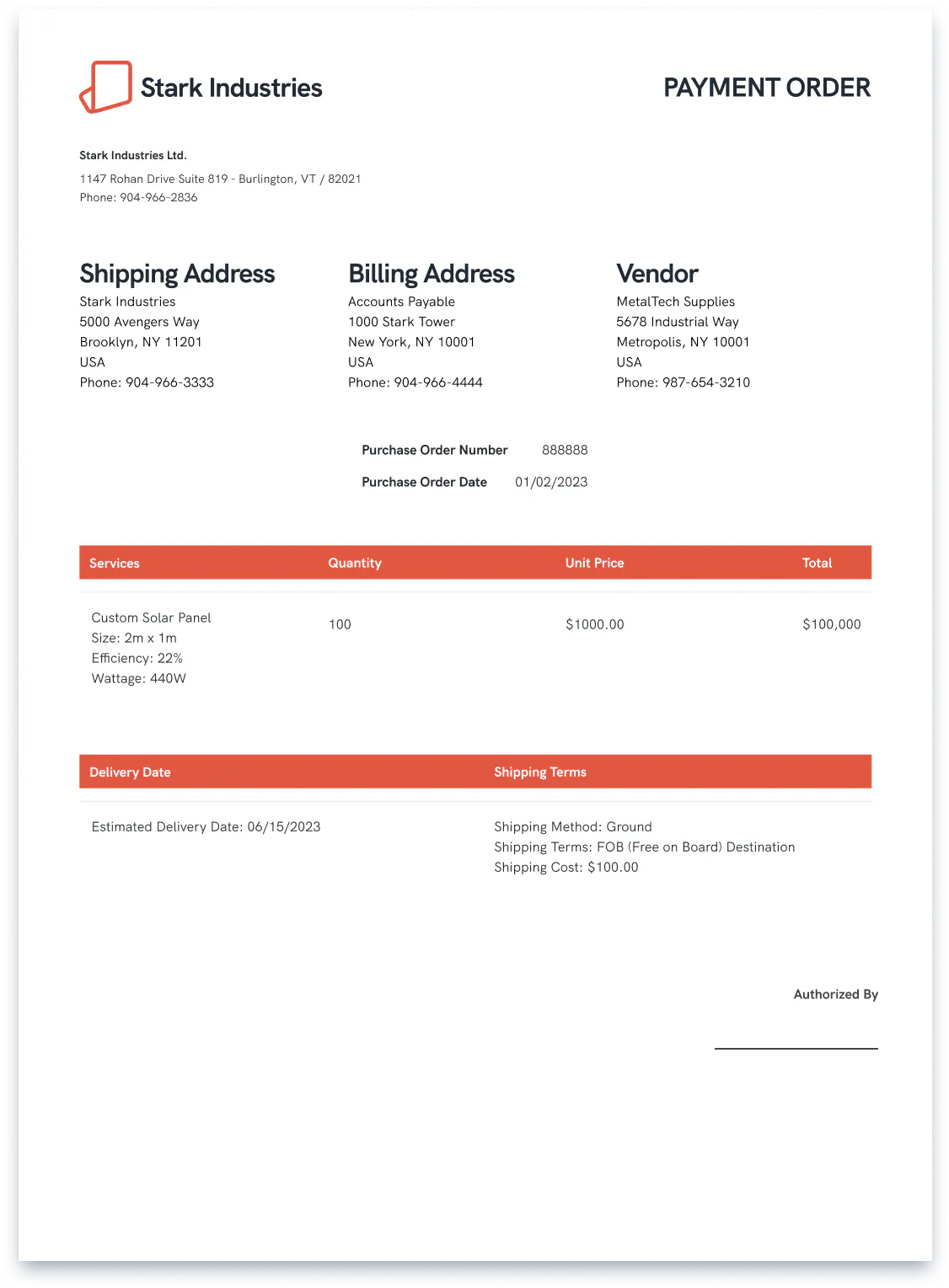
Typically, businesses issue a purchase order to order supplies or services from a supplier. Here are examples of situations when you or the procurement team may have to prepare this document.
What Is an Invoice?
An invoice, or sales invoice, is an official document that a seller issues to collect payments for goods or services rendered. Invoices are important in sales transactions and are crucial in financial reporting, taxation, budgeting, and accounting, as they provide tangible evidence of outgoing expenses and incoming payments.
After the seller completes the terms of purchase, they will issue an invoice to collect payment from the buyer. An invoice also serves as a legal document that binds the buyer to pay the seller for the purchase.
💡Tip: An invoice is different from a bill, which is more commonly used in one-time B2C sales transactions.
Depending on the purposes, businesses in different industries may use different types of invoices. However, these are the essential details that must be included on every invoice:
💡Fact: 39% of invoices are paid late in the United States. To get paid on time, make sure to include all the essential details clearly when creating an invoice.
Here’s what a basic invoice looks like. There are also no regulations about how to format an invoice, but every essential detail should be provided with clarity and transparency.
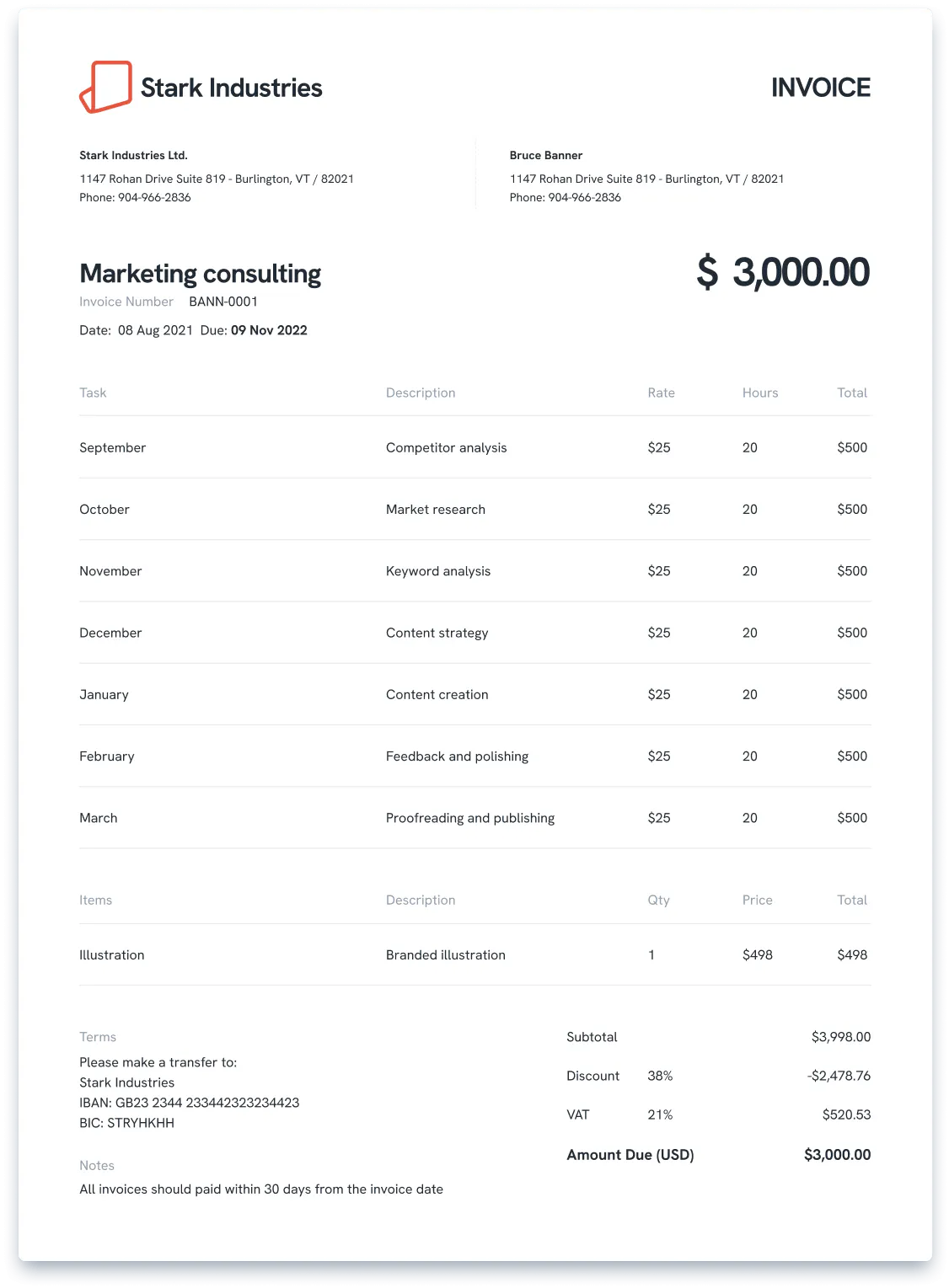
💡 Tip: After receiving invoice payments from the customers, the seller should always issue uu7 se a receipt as proof of payment.
Normally, a standard invoice is sent when the seller is requesting payment from the buyer. Let’s look at the examples of when you would need to issue an invoice.
Purchase orders and invoices are two essential documents in the procurement process. Although they share similar details, the key difference between a purchase order and an invoice is when it is issued and for whom.
Apart from these, there are also other factors that make a purchase order different from an invoice.
Let's take a closer look at them.
| Purchase Order | Invoice | |
|---|---|---|
| Purposes | Request confirmation to supply goods | Request payment for goods or services provided |
| Usage | Simplify inventory management | Facilitate accounting and financial management processes |
| Sender | Buyer | Seller |
| Content | Provide terms of purchase, including billing and shipping details | Provide payment terms, including final price, payment methods, and payment due date |
| Timing | When placing the order | When the order is fulfilled |
| Payment | Do not require payment | Require payment |
In essence, a purchase order is a formal request made by the client to the seller to purchase goods or services, outlining the client's expectations and terms for the transaction. Once the seller accepts the purchase order, it becomes a legally binding agreement, obligating them to deliver the specified goods or services.
On the other hand, an invoice is an official request for invoice payment issued by the supplier to the client when the order is completed per the terms established in the purchase orders.
Apart from its primary function, the buyer can conveniently track the progress and status of the order by referring to the purchase orders. This type of document also assists in maintaining an accurate inventory record and thus prevents overstocking.
At the same time, invoices can be used to simplify the accounting and payment processes. Keeping an organized invoicing management facilitates the team to calculate company spending and taxes, as well as reduce the risks of duplicate payments.
A customer sends a purchase order, whereas the vendor sends an invoice.
In businesses, the sender of purchase orders is usually the purchasing department, while the sender of invoices is usually the billing department.
Although both purchase orders and invoices contain similar pieces of information, such as the contact information of both the buyer and the seller and product or service details and quantity, there is information specific to each document.
Purchase orders typically include the buyer’s billing and shipping address, purchase order number (PO number), and delivery terms. They contain information the seller needs to know to process and deliver the order.
Invoices, on the other hand, contain invoice numbers and details about the payment, especially payment methods, due dates, and payment terms. Invoices would provide the details necessary for the buyer to pay for the purchase.
Purchase orders are issued before the delivery of goods, while invoices are sent at the same time or after the shipment. A purchase order is typically sent before an invoice in a buying process.
Let’s briefly look at the timeline of when each document is issued during the purchase order process.
Sales quote → Purchase order → Order confirmation → Invoice → Receipt
Despite the differences between a purchase order and an invoice, they share some similarities:
Purchase orders and invoices are crucial documents that help businesses of all sizes and across different industries run smooth internal operations.
While a purchase order ensures efficient inventory management, an invoice contributes to an organized accounting process. Using both purchase orders and invoices effectively can streamline and improve your business’s purchasing, budgeting, and cash flow management.
Additionally, consider going digital instead of manually managing purchase orders and invoices. Studies show that e-invoicing can save up to 70% of the costs compared with paper billing.